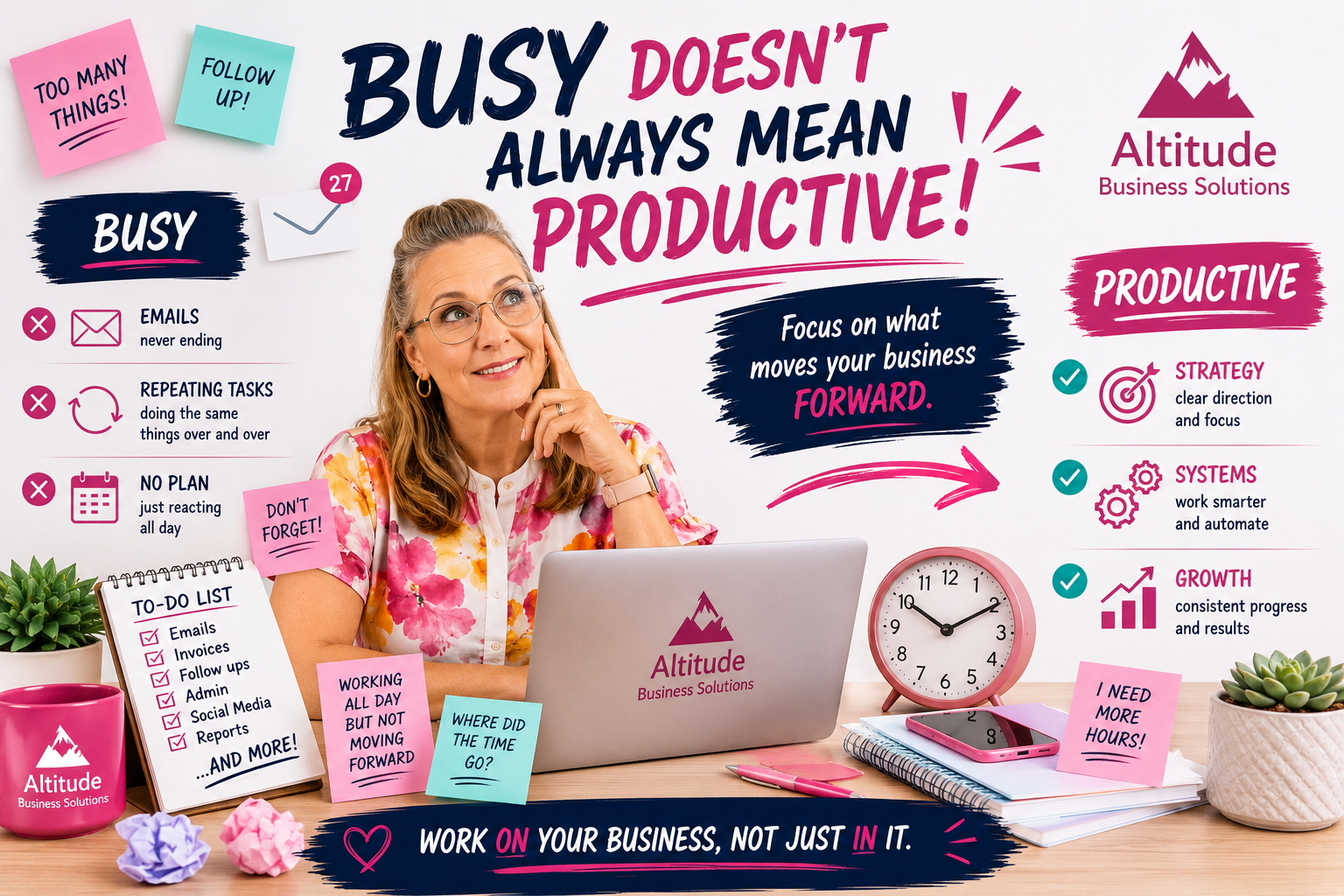

As business owners, we wear “busy” like a badge of honour.
“How’s business?”
The answer is almost automatic…
“So busy!”
Our calendars are full, our inbox is overflowing, we’re answering messages at night, jumping between tasks all day and somehow still ending the week wondering:
“What did I actually achieve?”
Here’s the thing many business owners eventually discover:
Being busy and being productive are not the same thing.
You can work all day, answer every email, reply to every notification and tick twenty little jobs off your list — but still not move your business forward.
Because activity doesn’t always equal progress.
Sometimes busy is just… busy.
Running a small business often means doing everything.
You’re the salesperson.
The marketing department.
The customer service team.
The admin assistant.
The problem solver.
The person who remembers the printer needs ink.
And because everything feels important, everything gets your attention.
But not everything deserves your attention.
The biggest challenge for many business owners isn’t that they aren’t working hard enough.
They absolutely are.
The challenge is knowing where their time creates the biggest impact.
This is one of the biggest shifts a business owner can make.
Working in your business keeps things operating.
Working on your business helps it grow.
Working in your business looks like:
Working on your business looks like:
Both are important.
But if you only ever work in your business, you can accidentally create yourself a very demanding job instead of building a business that supports you.
Imagine walking on a treadmill.
You can spend an hour moving, sweating and working hard…
But when you step off, you’re still in exactly the same place.
Business can feel exactly like that.
A full day doesn’t automatically mean a productive day.
Ask yourself:
Sometimes the most valuable business growth comes from stopping and questioning what you’re doing.
Small business owners are incredibly good at protecting money.
We compare prices.
We watch expenses.
We think carefully before investing.
But we often give away our time without thinking twice.
Spending three hours doing something manually every week might not feel expensive…
Until you realise that’s over 150 hours a year.
Imagine what you could do with that time.
Meet more customers.
Develop new services.
Create content.
Build relationships.
Or even just have more time away from your business.
Because creating a successful business shouldn’t mean being exhausted all the time.
One of the biggest misconceptions about systems and automation is that they make businesses less personal.
But good systems actually give you more time to be personal.
A great system might:
The goal isn’t to remove the human connection.
The goal is to remove the repetitive work that stops you from focusing on what matters.
Every business collects habits.
Processes that made sense five years ago.
Tasks created when the business was smaller.
Manual steps that technology could now simplify.
Sometimes we keep doing things because nobody has stopped long enough to ask:
“Is this still the best way?”
That question alone can change everything.
You don’t need to overhaul everything overnight.
Start simple.
Look at your week and ask:
What tasks take up most of my time?
What do I keep repeating?
What frustrates me?
What keeps getting forgotten?
Where do customers get stuck?
What would make running my business easier?
Small improvements create big changes over time.
Being busy might make us feel productive.
But strategy creates growth.
The goal isn’t to squeeze more hours into your day.
The goal is to make the hours you already have work better.
Because a successful business isn’t measured by how exhausted you are at the end of the week.
It’s measured by the progress you’re making.
So next time someone asks:
“How’s business?”
Maybe the goal isn’t to say:
“I’m so busy.”
Maybe the goal is to say:
“I’m focused on what actually matters.”

Discover why regular email marketing keeps your business front of mind, strengthens customer relationships, builds trust and turns your existing database into new opportunities.
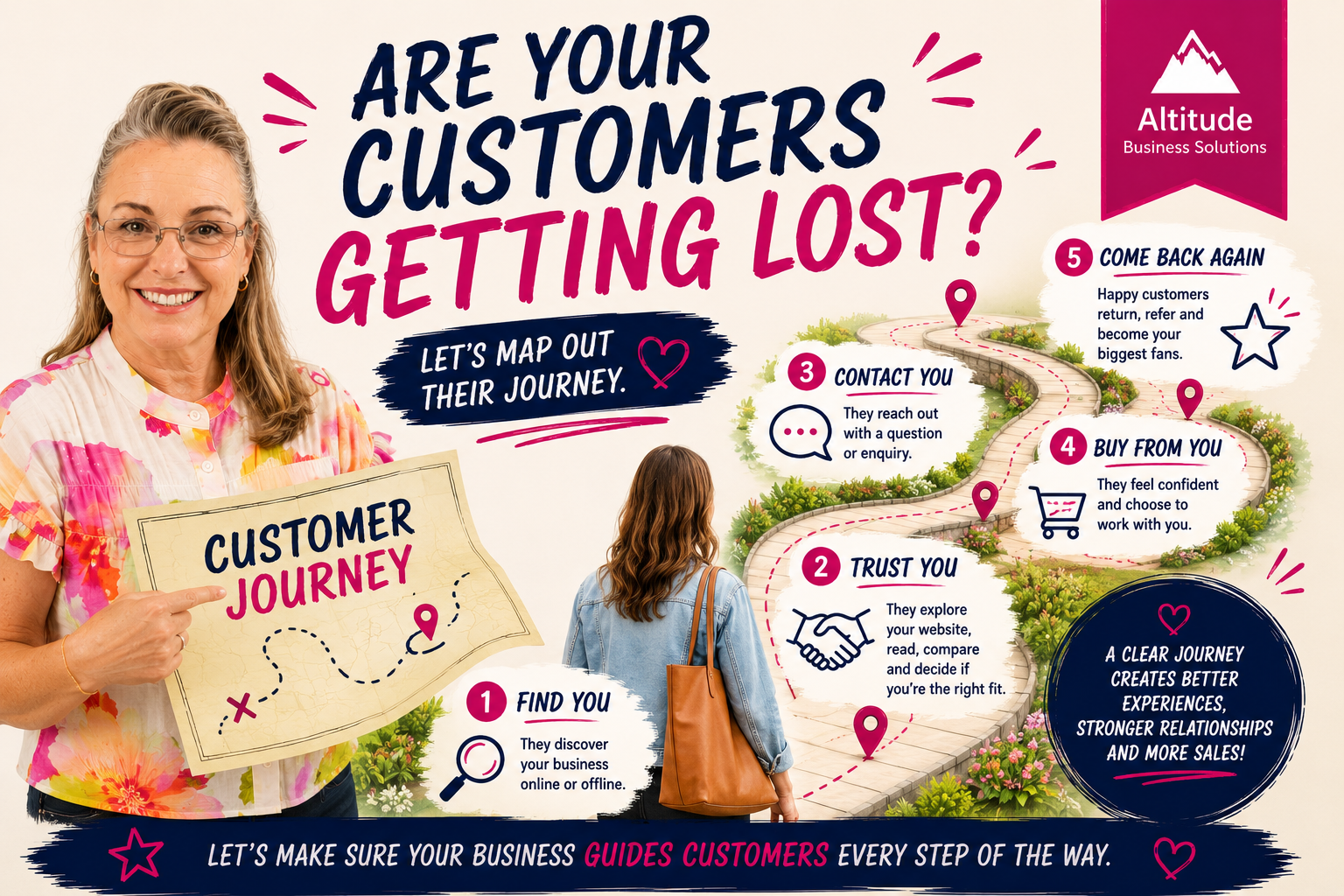
Your customers are on a journey from discovering your business to deciding whether to buy. Learn how your website, marketing and communication can guide them every step of the way.

Can visitors tell what your business does in under five seconds? Learn how to evaluate your website through your customer's eyes and improve conversions.
Leave a Comment